Powder Coating Oversized Irregular Parts: 7 Factors Manufacturers Should Consider
Greg Yahn is an owner of Advanced Finishing USA and leads a diversified, third-generation metal finishing operation in Erie, PA. A Penn State-trained industrial engineer with an MBA, Greg has scaled the 80,000-square-foot facility into one of the leading powder coating companies in the Northeastern United States. Greg remains invested in the day-to-day operations at Advanced Finishing while also contributing his expertise to renowned publications and industry presentations.
Powder Coating Oversized Irregular Parts: 7 Factors Manufacturers Should Consider
Heavy parts and irregular shapes require enough clearance inside coating equipment and curing ovens. Their weight and geometry also call for suitable material handling systems. Supplier screening becomes harder when a shop does not publish its oven dimensions or maximum handling weight.
At AFUSA, we provide powder coating for heavy oversized irregular parts. Our large-part capacity keeps coating work at one facility and reduces extra handling between production stages. Read on to learn about seven factors manufacturers should consider before powder coating an oversized part.
Get a Quote For Powder Coating for Heavy Oversized Irregular Parts »
1. Confirming Clearance at Every Production Step
A part that fits inside one of our curing ovens may still exceed the available clearance at another production stage. Pretreatment equipment, the coating area, and the transfer route can impose different dimensional limits. Clearance at one stage does not confirm clearance throughout the complete process.
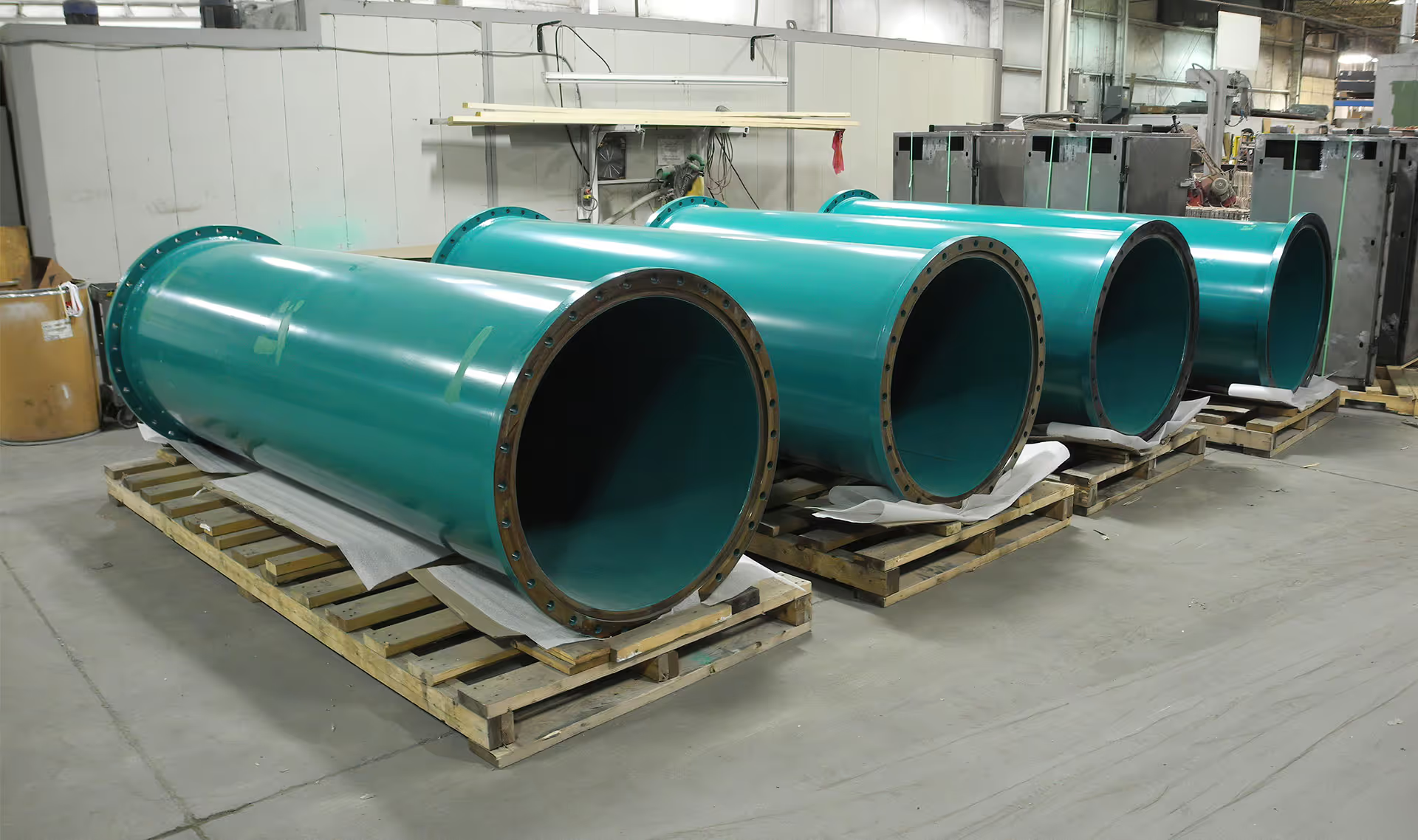
Our 80,000-square-foot facility includes large curing ovens and material-handling systems designed for oversized components, heavy weldments, and complex assemblies. Completed projects include large-diameter pipes, valves, and pumps for a water-management equipment manufacturer. Each component must fit every required stage in its planned production orientation.
2. Weight Distribution and Safe Handling
A part’s total weight alone does not define its handling requirements. Load dimensions, center of gravity, and lifting points influence how the part must be supported. Poor support can allow an irregular assembly to shift or rotate during movement.
Some products arrive at our facility as complete assemblies for disassembly and powder coating. Our team safely separates each product and applies the specified coating to its individual components. We then reassemble the finished components according to the project requirements.
3. Thermal Mass and Cure Consistency
Large fabricated assemblies can combine thick weldments with thin plate or tubing. Section thickness can cause different areas to reach the required metal temperature at different times. Oven air alone does not show whether the slowest-heating coated area has completed the specified cure cycle.
We review the application requirements for an epoxy coating project. The powder’s technical data sheet specifies the required part-metal temperature and cure time. Substrate material, section thickness, and total mass influence how long the component takes to enter that cure window.
4. Geometry and Powder Coverage
Irregular parts can contain recesses, inside corners, channels, or protrusions. Electrostatic powder may collect around exposed edges instead of reaching the deepest areas. This Faraday cage effect can leave recessed surfaces below the specified film thickness.
We consider part geometry before selecting an epoxy application method. Electrostatic spray requires adequate access to every surface covered by the finish specification. Fluid-bed dipping requires a component that can be preheated and immersed in the powder.
5. Surface Pretreatment and Drainage Needs
Large fabricated parts can carry oil, rust, mill scale, or welding residue. Surface contamination can weaken adhesion or cause visible defects. Hollow sections and enclosed pockets must drain before powder application.
We can perform zinc phosphating in-house for steel projects. Military-grade aluminum often requires chromate conversion through a trusted local partner. Our AAMA powder coating process uses Bonderite ceramic zirconium pretreatment.
6. Rack Design and Grounding Control
Most large parts move through the coating line on carts rather than hanging racks. Cart and rack contact points must make clean metal-to-metal contact with ground. Their locations should avoid surfaces with specified cosmetic or protective coverage. Coating buildup on the cart or rack can increase resistance and weaken electrostatic attraction.
Project drawings should identify threads, mating surfaces, and other locations that must remain coating-free. We can mask specified areas before sandblasting and remask them before powder application. This sequence protects the intended no-coat surfaces during both preparation and finishing.
7. Final Inspection and Delivery Preparation
We inspect every powder-coated part before shipment or customer pickup. This review checks the completed finish against our quality benchmarks. Separate specification requirements may call for dry-film thickness checks or testing under ASTM D3359 and ASTM B117.
Inspected components can proceed to packaging, labeling, or temporary storage. We can also provide inventory management and direct distribution upon request. Keeping these steps with one provider reduces extra handling before delivery.
Our Experience and Qualifications
We are a third-generation family business with more than 50 years of powder coating experience in Pennsylvania. Our coatings are used by Amazon, Nvidia, Caterpillar, and the U.S. military. Completed projects include the 9/11 Memorial in New York and Shanghai Disney.
Our qualifications include certified 3M applicator status and SAM.gov registration under CAGE Code 3DHF5. We are also America’s largest independent Decoral licensee for wood-grain powder coating projects. The Fairview location provides inbound and outbound freight access through I-79, I-80, and I-90.
Powder Coating Options for Large Parts
The metal type and expected service conditions guide our powder selection. Each chemistry produces a different balance of corrosion resistance and UV stability. The table compares three available options:
Powder chemistry and application methods require separate decisions for each part. On epoxy projects, we use the geometry and required film thickness to select electrostatic spray or fluid bed dip. Our team reviews the complete finish specification before the production run begins.
Choose AFUSA For Oversized Irregular Part Powder Coating
Powder coating for heavy, oversized, irregular parts requires equipment matched to the component and its finish specification. Part dimensions and service conditions guide the coating material and application method.
We provide one source for coating oversized components and completing requested post-finishing services. Our assembly, packaging, storage, and distribution capabilities can reduce handoffs before delivery.
Click below for a quote and to learn more about powder coating for heavy, oversized, irregular parts.
Get a Quote For Powder Coating for Heavy Oversized Irregular Parts »